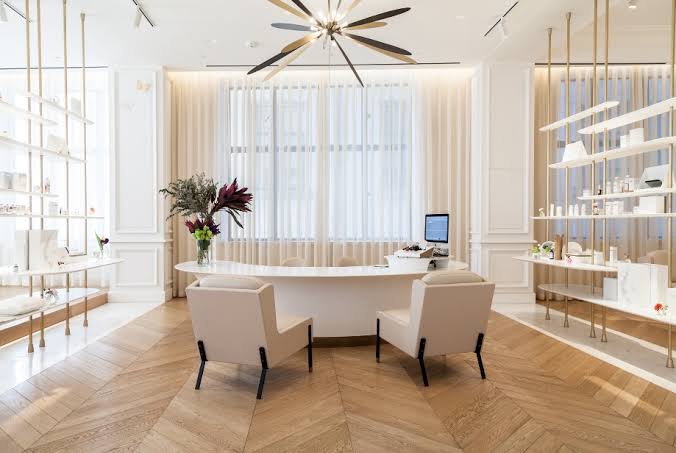
Commercial interiors require surfaces that balance durability, design flexibility, maintenance, and everyday performance. Commercial solid surface applications can support these requirements across offices, healthcare facilities, hospitality venues, restaurants, retail environments, and other high-use spaces.
Acrylic solid surface is particularly adaptable because it can be fabricated into different shapes, sizes, edges, and configurations. This flexibility allows designers to develop cohesive interiors while addressing practical requirements such as frequent cleaning, heavy use, moisture exposure, and customized layouts. Hyundai L&C offers Hanex Solid Surfaces for commercial projects requiring adaptable surface solutions.
Ideal Spaces for Solid Surface Solutions
Solid surface can be considered for a wide range of commercial environments. The appropriate application depends on traffic levels, cleaning requirements, design specifications, and the functional demands placed on each surface.
Common applications include:
- Reception and transaction counters
- Healthcare workstations
- Hospitality vanities
- Restaurant and food service counters
- Retail displays
- Office work surfaces
- Public-facing tables
- Wall and vertical applications
Each setting presents different performance requirements. A healthcare counter may prioritize easy maintenance and cleanability, while a hotel vanity may place greater emphasis on appearance and design continuity. Understanding the environment helps project teams specify the material more effectively.
Commercial Countertops for High-Traffic Areas
Commercial countertops can experience significantly more daily activity than residential surfaces. Employees, customers, patients, and visitors may interact with the same areas repeatedly, creating exposure to spills, impacts, heat, moisture, and routine cleaning.
Material selection should therefore extend beyond color and pattern. Surface durability, fabrication options, maintenance requirements, repairability, and installation considerations can all affect long-term performance.
Acrylic solid surface also offers design flexibility that can be useful in commercial settings. Custom edge profiles, curved elements, integrated features, and different configurations can help designers create surfaces that complement the surrounding architecture.
Healthcare and Hospitality Applications
Healthcare environments require thoughtful material selection because countertops and work surfaces may be cleaned frequently and used throughout the day. Workstations, reception desks, treatment areas, and other surfaces must fit naturally into demanding operational environments.
Hospitality spaces have their own requirements. Hotel bathrooms, reception counters, restaurants, and service areas need surfaces that support repeated use while maintaining a polished appearance.
Seamless fabrication can be particularly useful in both settings. Reducing visible joints can create a more continuous appearance while allowing fabricators to produce customized configurations suited to the project.
Food Service and Commercial Work Areas
Food service environments introduce additional considerations. Countertops may encounter moisture, food products, cleaning solutions, hot equipment, and repeated contact throughout operating hours.
The intended application should therefore be considered before fabrication begins. Dimensions, cutouts, equipment placement, seams, support requirements, and installation conditions can all influence how a surface performs after installation.
Manufacturer documentation should also be reviewed when specifying materials for specialized commercial applications. Technical guidance can help project teams understand appropriate fabrication methods, installation requirements, and maintenance considerations.
Wide-Sheet Options for Larger Installations
Sheet dimensions can influence both design possibilities and fabrication efficiency. Large commercial countertops, service counters, islands, and other expansive surfaces may benefit from sheet sizes that reduce unnecessary seams or complicated joins.
Wide-sheet solid surface can provide greater flexibility when developing larger installations, making it a valuable consideration for commercial solid surface applications. Designers can explore broader surface areas while fabricators evaluate how available dimensions align with the project’s layout.
This can be especially relevant for commercial environments where long counters or expansive work surfaces are central to the interior design. Reviewing available sheet dimensions early can help minimize fabrication adjustments and support a more efficient installation process.
Key Factors When Selecting a Commercial Surface
Choosing a surface for a commercial project involves more than comparing colors. A practical evaluation should consider how the material will perform within the specific environment.
1. Expected Traffic
Consider how frequently the surface will be used and who will interact with it. High-traffic areas may require different performance considerations than low-contact decorative surfaces.
2. Cleaning Requirements
Identify how often surfaces will be cleaned and what types of cleaning products or procedures may be used. Maintenance requirements should align with the operating environment.
3. Fabrication Flexibility
Review available edge treatments, seams, curves, cutouts, integrated elements, and custom configurations. Fabrication flexibility can significantly affect the final design.
4. Sheet Dimensions
Confirm whether available sheet sizes can accommodate the proposed layout. This is particularly important for large countertops and extended commercial surfaces.
5. Repair and Maintenance
Consider how minor damage or wear can be addressed over the life of the installation. A surface that can be maintained or repaired may provide practical advantages for active commercial spaces.
6. Technical Support
Product specifications, fabrication instructions, installation guidance, and warranty information can help architects, contractors, and fabricators make more informed decisions.
Designing for Function and Visual Consistency
Commercial interiors often need to communicate a consistent visual identity while meeting demanding functional requirements. A reception counter may form an important part of a company’s first impression, while a restaurant surface must support daily operations without compromising the surrounding design.
Solid surface can bridge these requirements through customizable fabrication. Curved counters, integrated components, coordinated surfaces, and vertical applications can contribute to a unified interior concept.
This flexibility also gives designers more freedom to move beyond standard rectangular countertop designs. Instead of treating the surface as an isolated component, it can become part of the overall architectural language of the space.
Plan Fabrication Before Installation
Early planning can make commercial surface projects more predictable. Architects, designers, contractors, and fabricators should consider dimensions, seams, cutouts, supports, equipment placement, and installation conditions before fabrication begins.
Coordination is particularly important for projects with complex layouts or large surface areas. Reviewing material capabilities during the design stage can help identify potential fabrication challenges before they affect construction schedules.
A useful approach is to connect three considerations from the beginning: design intent, material performance, and installation requirements. When these factors are evaluated together, material selection becomes more practical and project-specific.
Choose the Right Surface for Your Commercial Project
Commercial solid surface applications can bring together durability, design flexibility, and practical maintenance for demanding commercial environments. The key is selecting a solution that aligns with the project’s traffic, functionality, fabrication requirements, and design goals.
Ready to explore solid surface options for an upcoming commercial project? Visit Hyundai L&C to discover Hanex Solid Surfaces, explore available designs and applications, and access product resources for informed project planning. Whether the project involves healthcare, hospitality, retail, food service, or corporate interiors, starting with the right material can make the path from concept to finished installation more efficient.