
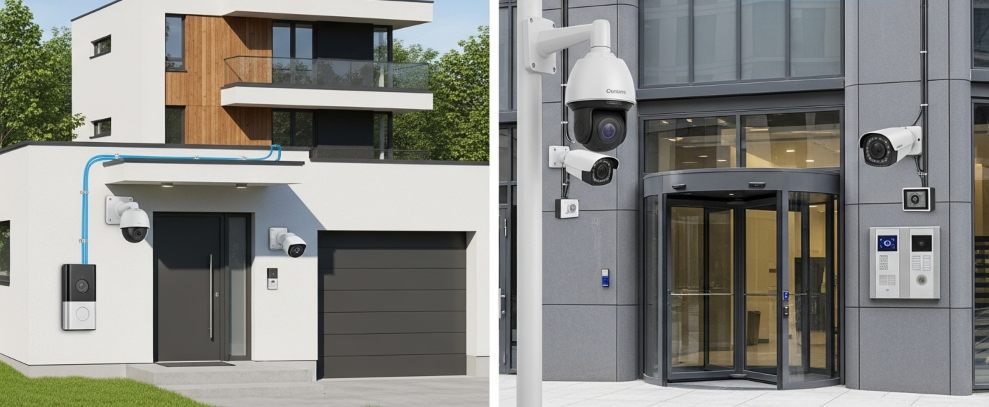
Understanding Modern Home Security Systems
Home security systems have evolved significantly from simple alarm setups to fully integrated smart protection networks. Today’s systems combine sensors, cameras, automation, and mobile connectivity to provide real-time monitoring and control of your home from anywhere in the world.
A modern home security system typically includes door and window sensors, motion detectors, surveillance cameras, control panels, and mobile applications. These components work together to detect unauthorized entry, alert homeowners, and in many cases, notify emergency services.
The main purpose of a security system is deterrence and rapid response. Visible cameras and alarm signage discourage intruders, while automated alerts ensure immediate action when suspicious activity is detected.
Smart home integration has further enhanced security capabilities. Systems can now connect with smart locks, lighting, and voice assistants, allowing homeowners to control and automate security features effortlessly.
Planning and Choosing the Right Security Setup
Before installing a home security system, proper planning is essential. Every home is different, and the ideal setup depends on factors such as property size, layout, neighborhood risk level, and budget.
The first step is identifying vulnerable entry points. These usually include front and back doors, ground-floor windows, garages, and side entrances. High-traffic areas inside the home may also require motion detection coverage.
Next, homeowners must decide between wired and wireless systems. Wired systems offer stable connectivity and are ideal for long-term installations, but they require professional setup. Wireless systems are easier to install and more flexible, making them popular for modern homes.
Another important consideration is whether to choose a professionally monitored system or a self-monitored system. Professionally monitored systems provide 24/7 surveillance through security companies, while self-monitored systems send alerts directly to the homeowner’s smartphone.
Camera selection is also crucial. Indoor cameras help monitor living spaces, while outdoor cameras are designed to withstand weather conditions and provide night vision capabilities. Doorbell cameras have also become popular for monitoring visitors in real time.
Budget plays a key role in decision-making. While basic systems are affordable, advanced smart security setups with AI features and cloud storage may require higher investment but offer better protection.
Step-by-Step Installation Process
Installing a home security system requires careful execution to ensure full coverage and proper functionality. The process begins with positioning the main control panel, which acts as the central hub of the entire system.
Once the control panel is installed, sensors are placed on doors and windows. These sensors detect opening and closing activity and trigger alerts when unauthorized access is detected. Proper alignment is important to ensure accurate detection.
Motion detectors are then installed in key areas inside the home. These devices detect movement within a specified range and are usually placed in hallways, living rooms, and entry points.
Surveillance cameras are mounted at strategic locations such as entrances, driveways, and blind spots. Outdoor cameras should be installed at elevated positions to maximize visibility and reduce tampering risks.
After hardware installation, the system is connected to a power source and configured through a mobile app or control panel. This includes setting up Wi-Fi connections, creating user accounts, and customizing alert preferences.
Testing is a critical step in the installation process. Each sensor and camera should be tested individually to ensure proper functionality. False alarms should be minimized by adjusting sensitivity settings.
Finally, homeowners should establish emergency contacts and ensure that notifications are properly configured. This ensures that alerts are received instantly in case of suspicious activity.
Smart Features and Automation in Security Systems
Modern home security systems are no longer limited to alarms and cameras; they now include advanced smart features that enhance protection and convenience.
One of the most important features is remote access. Homeowners can monitor live camera feeds, lock or unlock doors, and receive alerts directly on their smartphones from anywhere in the world.
Artificial intelligence is also playing a major role in security systems. AI-powered cameras can distinguish between humans, animals, and objects, reducing false alarms and improving accuracy.
Automation features allow systems to respond intelligently to events. For example, if motion is detected at night, lights can automatically turn on, and cameras can begin recording instantly.
Cloud storage is another essential feature. Instead of storing footage locally, recordings are saved online, making them accessible even if the device is damaged or stolen.
Voice control integration with assistants allows users to manage security systems using simple voice commands, adding an extra layer of convenience.
Some advanced systems also include facial recognition, package detection, and geofencing, which automatically arms or disarms the system based on the homeowner’s location.
Maintenance, Security Risks, and Best Practices
Installing a home security system is not a one-time task; regular maintenance is required to ensure long-term effectiveness. Batteries in wireless sensors must be checked and replaced periodically to avoid system failure.
Cameras should be cleaned regularly to maintain clear video quality, especially outdoor units exposed to dust and weather conditions. Software updates are also important, as they improve security features and fix vulnerabilities.
Cybersecurity is another important concern. Since many systems are connected to the internet, they can be vulnerable to hacking if not properly secured. Strong passwords, two-factor authentication, and secure Wi-Fi networks are essential for protection.
False alarms are a common issue in home security systems. These can be reduced by adjusting motion sensitivity and properly positioning sensors away from heat sources or moving objects like curtains.
Homeowners should also conduct regular system tests to ensure all components are working correctly. This includes checking camera feeds, sensor responses, and notification settings.
Ultimately, a well-installed and properly maintained home security system provides peace of mind, protects valuable assets, and enhances overall safety for residents. With advancing technology, home security is becoming more intelligent, reliable, and accessible than ever before.